 Skip to main content

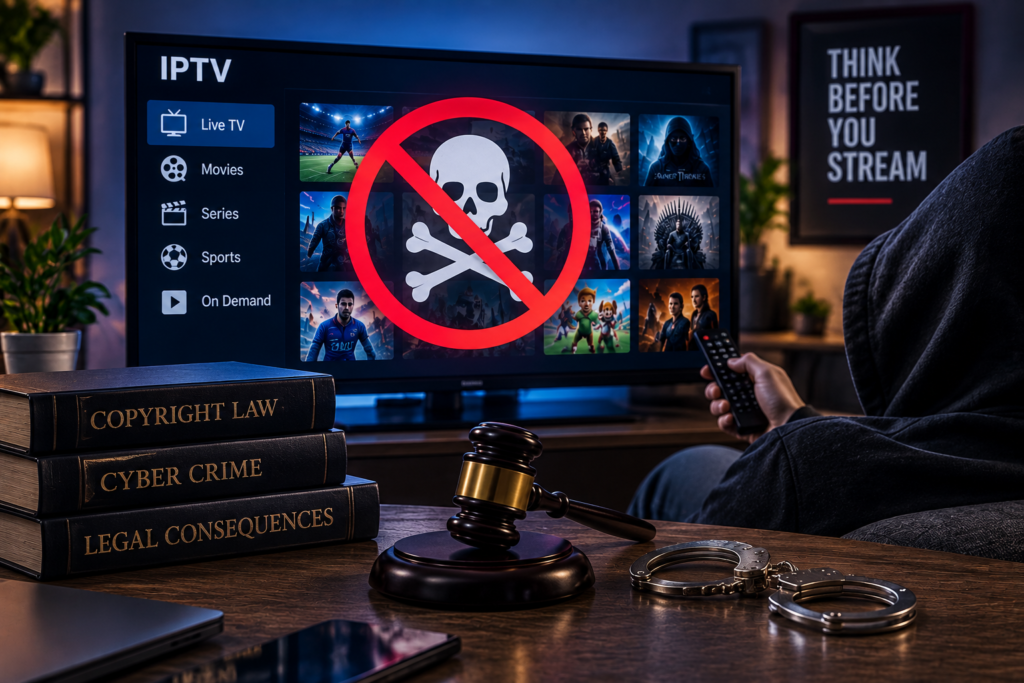
Search for iptv illegal and you will quickly find conflicting answers. Some sources suggest that IPTV itself is unlawful, while others treat every internet based television service as completely legal. Neither explanation tells the whole story.
IPTV is simply a technology for delivering television and video through an internet connection. Using IPTV is not automatically illegal in Sweden. The important question is whether the provider has permission to distribute the television channels, films, sports, series, and other copyrighted material included in its service.
That distinction matters more than ever in 2026 as Sweden continues to strengthen its response to unauthorized IPTV services. This guide explains the difference between legal and illegal IPTV, the current position for Swedish viewers, and the practical signs consumers should check before paying.
This article provides general information and should not be treated as individual legal advice.
Is IPTV Illegal in Sweden?
No. IPTV technology itself is legal in Sweden.
IPTV stands for Internet Protocol Television. Instead of receiving television through an antenna, satellite signal, or traditional cable connection, video is transmitted through an internet network.
Swedish broadband and television providers already use this technology legitimately. What determines legality is not the delivery method but whether the service has the necessary rights to distribute its content. Bredbandsval makes the same distinction, explaining that IPTV technology is legal while unauthorized services may distribute channels and films without the required agreements.
In simple terms, a licensed IPTV service can be lawful. A service retransmitting copyrighted television, films, or sport without permission may violate copyright law.
What Makes an IPTV Service Illegal?
Copyright holders generally control how their protected works are copied and made available to the public. Swedish intellectual property authority PRV explains that communication through television and the internet can fall within these exclusive rights.
An IPTV operation can therefore create legal problems when it takes protected broadcasts or content and redistributes them without authorization.
This may involve:
- Television channels retransmitted without permission
- Premium sports broadcasts supplied without distribution rights
- Films or television series made available without authorization
- Subscription credentials or streams obtained through unauthorized sources
- Content copied or communicated to customers without consent from relevant rights holders
The number of channels, streaming quality, device support, or price does not determine legality. Licensing and permission are what matter.
Legal IPTV and Illegal IPTV Are Not the Same Thing
The word IPTV has sometimes become associated with piracy because unauthorized operators also use IPTV technology. That can create the false impression that the technology itself is prohibited.
A better comparison is internet streaming in general. Streaming technology is legal. What matters is whether the person or company supplying copyrighted material has the right to do so.
For Swedish consumers, this means you should examine the provider rather than judging legality simply from the fact that an IPTV app, playlist, Smart TV, or internet connection is involved.
When reviewing a service, also look carefully at its available IPTV channels so you understand what content is being offered rather than choosing solely from a headline channel count.
Can Viewers Get in Trouble for Illegal IPTV in Sweden?
This is where the legal position becomes more nuanced.
PRV explains that the legal treatment of viewing content from illegal streaming services has developed following a 2017 judgment from the Court of Justice of the European Union. In that case, temporary copies created while knowingly streaming unlawfully supplied material through a media player were not covered by the normal exception for temporary copies.
PRV also notes that it has not been fully clarified whether the same reasoning applies to every form of streaming from an unlawful source, and that this particular question has not been decided in the same way by Swedish courts.
Consumers should therefore avoid assuming that merely watching an unauthorized stream is automatically risk free.
What Changed in Sweden During 2026?
Sweden has been considering clearer rules specifically addressing illegal IPTV.
A government inquiry published as SOU 2025:100 proposed changes intended to make it clearer that private individuals are prohibited from unlawfully consuming certain illegal IPTV services. The inquiry argued that existing rules probably already make many forms of illegal IPTV streaming unlawful, but that uncertainty remains in some situations.
Importantly, the inquiry’s proposed July 1, 2026 date was a proposed commencement date. It did not by itself make the changes law.
As of September 2026, the government’s official legislative record still describes the illegal IPTV measures as an ongoing legislative matter following the inquiry and consultation process. Readers should therefore distinguish between current law and proposals that may become law later.
This is an important correction to older articles that presented July 2026 as though implementation were already certain.

Sweden Is Still Taking Enforcement Seriously
The absence of a completed new consumer law does not mean illegal IPTV is ignored.
In May 2026, Sweden’s Patent and Market Court of Appeal upheld a conviction concerning an IPTV service where copyrighted films were unlawfully communicated to the public and protected television transmissions were retransmitted without authorization.
That decision concerned the provision and distribution of an unauthorized IPTV service rather than creating a simple rule that every IPTV viewer commits an offence.
It does, however, demonstrate that copyright enforcement against unauthorized IPTV distribution is active in Sweden.
How Common Is Illegal IPTV in Sweden?
The issue remains significant despite indications that usage is declining.
MovieZine reported in September 2026, citing Mediavision figures, that around 465,000 Swedish households had access to illegal IPTV during spring 2026. The corresponding estimate for spring 2025 was 640,000 households, representing a decline of roughly 27 percent.
The decline does not change the legal distinction. Consumers still need to understand whether a television service is operating with appropriate rights.
How Can You Tell Whether an IPTV Service Is Legitimate?
There is no single website design, application, or technical feature that proves a service is licensed. Consumers need to look at the overall picture.
Check Who Operates the Service
A trustworthy provider should make it reasonably clear who customers are dealing with. Look for contact details, understandable terms, customer support, subscription information, and clear payment conditions.
An anonymous seller communicating only through temporary messaging accounts deserves greater scrutiny.
Question Prices That Seem Unrealistic
Price alone does not prove anything illegal. However, an extremely low fee combined with access to virtually every premium sports package, film platform, pay television network, and international channel should encourage further investigation.
Broadcasting rights are valuable. Consumers should ask whether an offer appears commercially realistic.
Look for Clear Service Information
You should understand what you are purchasing, how the subscription works, supported devices, renewal terms, and how customer support is provided.
Before subscribing, reviewing an IPTV FAQ and service information page can help answer practical questions about account use and setup.
Apply the Same Checks When Comparing Providers
Do not assume that a service is lawful simply because it appears prominently in search results or has a professional website.
If you are comparing another provider such as IPTV Sverige, use the same checks for licensing transparency, service terms, business information, and content rights rather than relying only on price or channel numbers.
Does Using a VPN Make Illegal IPTV Legal?
No.
A VPN changes how your internet connection is routed and can provide legitimate privacy and security benefits. It does not create broadcasting rights or transform unauthorized copyrighted content into licensed content.
The legal question remains whether the material is supplied and consumed in accordance with applicable copyright rules.
Consumers should therefore be cautious of claims suggesting that using a VPN automatically removes copyright concerns.
Are IPTV Apps Illegal?
Usually, an IPTV player is simply software.
Applications designed to organize playlists, display an Electronic Program Guide, play video streams, or provide television navigation are not automatically unlawful. The legal issue usually concerns the source of the content loaded into the application and whether the provider has permission to distribute it.
The same IPTV application may therefore be used with legitimate content in one situation and unauthorized content in another.
Is an IPTV Box Illegal?
The physical device itself is not necessarily illegal either.
Smart TVs, Android TV devices, computers, streaming boxes, and other hardware can all play legitimate online television.
Problems can arise when equipment is specifically configured, marketed, or supplied in connection with unauthorized streams. European case law has addressed media players deliberately sold with access to illegal streaming sources, which is one reason consumers should look beyond the hardware itself.
Frequently Asked Questions
Is All IPTV Illegal in Sweden?
No. IPTV is a legal method of transmitting television through internet networks. Legality depends mainly on whether the content provider has the rights required to distribute the channels and programmes being offered.
Is Watching Illegal IPTV Currently a Crime in Sweden?
The answer depends on the circumstances. Existing copyright principles and EU case law can make certain unlawful streaming activity infringing, while Swedish authorities have acknowledged uncertainty about how the rules apply to every form of illegal IPTV consumption. A government inquiry has proposed clearer legislation aimed specifically at private users, but the official legislative process remained ongoing as of September 2026.
Can IPTV Providers Be Prosecuted?
Yes. Providers that distribute copyrighted television, films, or protected broadcasts without authorization can face copyright proceedings. Swedish courts have issued convictions involving unauthorized IPTV distribution.
Does a Cheap IPTV Subscription Mean It Is Illegal?
Not automatically. Price is only one signal. Licensing arrangements, business transparency, content rights, subscription terms, and who operates the service are more meaningful factors.
Will Swedish IPTV Laws Change Again?
They may. The Swedish government has been considering proposals specifically aimed at illegal IPTV and private consumption. Because legislation can change, viewers should check current information from official Swedish sources when legal certainty is important.
Understanding whether IPTV is illegal starts with separating the technology from the content rights behind it. IPTV itself is not prohibited, but unauthorized distribution of copyrighted television and streaming content can create serious legal issues. Swedish viewers should check providers carefully, understand what they are purchasing, and avoid assuming that every inexpensive streaming package is legitimate. If you want to explore television packages, device support, live channels, sports, films, series, and streaming options for Swedish viewers, visit Monster IPTV to review the available service information before choosing a plan.
